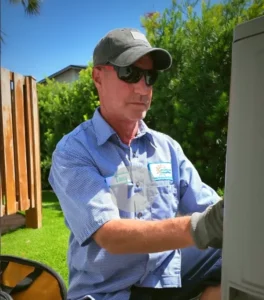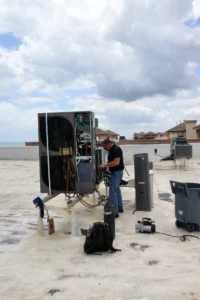
The right commercial air conditioning company for a Brevard County business is one that carries proper commercial licensing and liability coverage, has hands-on experience with rooftop and packaged units sized for your square footage, and can document code compliance for your specific occupancy type. Unlike a residential-only technician, a qualified commercial contractor understands multi-zone systems, higher-voltage electrical connections, and the building codes that apply to retail, office, restaurant, and industrial spaces. Finding one nearby is only the first step, knowing what to check before you sign a contract is what actually protects your building and your budget.
How Is Commercial AC Work Different From Residential Jobs?
Commercial systems are built around a different set of demands than the split system cooling a house. A single-family home typically runs one or two condensing units matched to a few tons of capacity. A retail storefront, medical office, or restaurant on the Space Coast might rely on multiple rooftop package units, each rated for significantly more tonnage, tied into building automation controls, exhaust systems, and make-up air requirements that don’t exist in a home.
Three factors set commercial work apart:
- Scale: Commercial units often condition much larger, more complex spaces, sometimes with multiple zones and separate thermostats feeding a single rooftop unit.
- Code requirements: Commercial buildings fall under different sections of the Florida Building Code and fire code than residential structures, including requirements for smoke dampers, exhaust interlocks, and refrigerant piping in occupied spaces.
- Downtime sensitivity: A restaurant kitchen without cooling, a server room overheating, or a retail floor at 85 degrees during a July afternoon creates lost revenue and potential liability within hours, not days.
A contractor who mainly services homes may not be equipped for these variables, especially the electrical and controls work that larger commercial units require.
What Questions Should You Ask Before Hiring a Contractor?
Before signing a service agreement or replacement contract, ask the contractor directly:
- Do you carry a Florida commercial HVAC contractor’s license, and can you provide the license number for verification?
- What is your general liability and workers’ compensation coverage, and can I get a certificate of insurance naming my business?
- How many commercial rooftop or packaged unit installations have you completed in the last two years?
- Can you provide references from other commercial properties in Brevard County, ideally similar in size or industry to mine?
- What is your average response time for an emergency service call to a commercial address?
- Do you stock common commercial parts, such as capacitors, contactors, and compressors for the equipment brands you install?
- Will you provide a written scope of work, including permit responsibilities, before starting any installation or major repair?
A contractor who hesitates on licensing or insurance documentation, or who can’t speak specifically to commercial equipment (as opposed to residential split systems), is a warning sign worth taking seriously.
Why Do Licensing and Insurance Matter More on Commercial Jobs?
If an uninsured contractor causes property damage or an employee injury while working on your building, your business, not just the contractor, can be exposed to liability. Commercial leases and property insurance policies frequently require proof of contractor coverage before work begins, and some municipalities will not issue permits for commercial mechanical work without a verified commercial license on file. Beyond the legal exposure, licensing reflects whether a technician has passed the exams and apprenticeship hours required to safely handle three-phase power, larger refrigerant charges, and rooftop units that may weigh several hundred pounds and require crane or lift equipment to service.
How Does Brevard County’s Climate Affect Commercial Systems?
Coastal salt air corrodes unprotected coils and cabinets faster here than it does inland, which is why rooftop and pad-mounted units near the Indian River Lagoon or beachside corridors benefit from coated coils and more frequent cabinet inspections. Year-round humidity, often sitting above 70 percent for months at a time, puts extra load on commercial dehumidification and increases the risk of microbial growth in ductwork if condensate drain lines aren’t checked regularly. During hurricane season, June through November, commercial properties also face a higher risk of storm-related outages and equipment damage, which is worth discussing with any contractor you’re vetting, since parts availability and emergency response capacity can tighten quickly after a major storm moves through the region.
How Do You Size Commercial Equipment Correctly?
Undersized commercial units run constantly and still fail to hold temperature, driving up energy costs and shortening compressor life. Oversized units short-cycle, which leaves humidity uncontrolled even though the space feels cool, a common complaint in Florida retail and office buildings. A proper commercial load calculation accounts for square footage, ceiling height, occupancy load, kitchen or equipment heat gain, and glass exposure, not just a rule-of-thumb tonnage estimate. Ask any contractor bidding on a replacement whether they perform a Manual N or equivalent commercial load calculation rather than simply matching the tonnage of your existing unit, since older systems are sometimes mismatched to begin with.
What Should a Maintenance Plan Cover?
Commercial maintenance should go beyond a filter change. A thorough visit typically includes checking refrigerant charge and pressures, inspecting belts and bearings on larger air handlers, cleaning condenser coils of salt residue and debris, testing electrical connections and contactors under load, and verifying that condensate drains and pumps are clear to prevent water damage to ceilings or flooring below. Businesses that depend on consistent indoor temperatures, such as medical offices, server rooms, or food service, benefit from a documented maintenance schedule that can also serve as a record for warranty claims. You can review what a structured maintenance plan typically includes if you’re comparing options.
Common Questions From Business Owners
How quickly should a commercial AC company respond to an emergency call?
Response expectations vary by contractor, but for businesses where cooling failure affects operations, such as restaurants, medical facilities, or server rooms, same-day response is a reasonable standard to ask about upfront rather than after an outage occurs.
Should I replace or repair an aging commercial rooftop unit?
Frequent repairs, rising energy bills, and a unit older than 12 to 15 years are typical signs replacement will cost less over time than continued repairs. A contractor should walk through the specific factors, unit age, repair frequency, and efficiency rating, rather than pushing replacement without justification. You can learn more about the replacement and repair process and what it involves for commercial equipment.
Do commercial AC installations require permits in Brevard County?
Most commercial HVAC installations and major replacements require a mechanical permit and inspection. A licensed commercial contractor should handle permit filing as part of the project scope, not leave it to the property owner.
Atlantic Air has worked on commercial cooling systems across the Space Coast for six decades, giving our technicians familiarity with the rooftop units, code requirements, and coastal wear patterns specific to this area. If you’re weighing your options for a storefront, office, or industrial space, you can review our commercial HVAC services or see our full service offerings before reaching out. When you’re ready to talk through your property’s specific needs, Request Service Today!