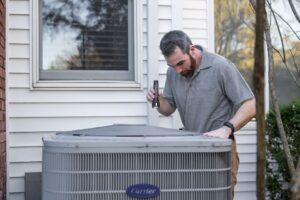
The right HVAC contractor is a licensed and insured company that provides a written, itemized estimate before starting work, employs technicians with manufacturer-specific certifications, stands behind its labor with a clear warranty, and has a documented history of service in your area. Anyone can hang a sign that says “HVAC repair,” but verifying these five things before you sign anything is what actually separates a contractor who will do the job right from one who will cost you more in the long run.
Brevard County’s climate adds a layer most homeowners don’t think about until it’s a problem. Salt air off the Space Coast accelerates corrosion on outdoor condenser coils and cabinets, especially within a mile or two of the water. Year-round humidity puts extra strain on evaporator coils and can lead to mold growth inside ductwork if a system isn’t sized or maintained correctly. And hurricane season creates real supply and scheduling pressure, meaning the contractor you pick needs to have the inventory and crew depth to respond when storms roll through, not just on a calm Tuesday in March. Keep all of that in mind as you compare quotes.
Is the Contractor Properly Licensed and Insured?
Florida requires HVAC contractors to hold a state certified or registered license to legally install, repair, or replace air conditioning and heating equipment. Ask for the license number directly and verify it through the Florida Department of Business and Professional Regulation’s online lookup tool. This isn’t a formality. An unlicensed contractor who damages your home, miswires a system, or improperly handles refrigerant leaves you with little recourse.
Insurance matters just as much. General liability coverage protects your property if something goes wrong during the job, and workers’ compensation protects you from being held liable if a technician is injured while working at your house. Never accept a verbal assurance, ask to see the certificate.
Does the Estimate Break Down Costs Line by Line?
A trustworthy contractor gives you a written estimate that separates equipment, labor, permits, and any additional materials like new ductwork or electrical upgrades, rather than a single lump number. This is your best defense against the two objections homeowners raise most often: unexpected charges mid-job and the sense of being overcharged with no way to check the math.
Several factors legitimately affect what a project costs, and understanding them helps you judge whether a quote is reasonable:
- System size and capacity, measured in tons or BTUs, which needs to match your home’s square footage and layout, not just replace what was there before
- Efficiency tier, since higher SEER2 ratings cost more upfront but lower monthly energy bills over the system’s lifespan
- Ductwork condition, particularly in Florida homes where ducts often run through hot, humid attics and may need sealing or replacement to prevent energy loss
- Complexity of the installation, including electrical panel upgrades, condensate line rerouting, or structural changes needed for new equipment
- Permitting requirements, which vary by municipality within Brevard County and are a sign the contractor is following code rather than cutting corners
If you want to understand these variables in more depth, this walkthrough of the installation process covers what typically happens between the estimate and the finished job. When you’re ready to compare real numbers for your specific home, a personalized free estimate gives you a far more accurate picture than any general price you’ll find online.
Are the Technicians Actually Certified on the Equipment They’re Installing?
Ask which brands the technicians are certified to install and service. Manufacturer certification means a technician has completed specific training on that equipment’s electrical systems, refrigerant charge specifications, and airflow requirements, which matters because an improperly charged system can lose 10 to 20 percent of its rated efficiency and wear out prematurely. A contractor who can name their certifications without hesitation is one who invests in ongoing technician training rather than sending out whoever’s available that day.
What Does the Warranty Actually Cover?
Two separate warranties apply to any new HVAC system: the manufacturer’s warranty on parts and equipment, and the contractor’s warranty on labor. Ask for both in writing, along with the exact term length and what voids them. A common way homeowners lose warranty coverage is by having maintenance performed by an unlicensed technician or skipping required annual service, so ask upfront what the manufacturer requires to keep the warranty valid.
Regular maintenance also matters for reasons beyond warranty compliance. Routine maintenance catches small issues like a dirty condenser coil or low refrigerant before they turn into a compressor failure, which is one of the most expensive repairs a system can need.
What Does Local Reputation Actually Tell You?
Online reviews matter, but read them for specifics rather than star ratings alone. Look for mentions of on-time arrival, clear communication about pricing, and how the company handled a problem when something didn’t go as planned, since every contractor eventually has a callback. Ask neighbors or your homeowners’ association who they’ve used, particularly for larger jobs like full system replacements, where a contractor’s experience with Florida’s building codes and permitting offices genuinely affects how smoothly the project goes.
A contractor with decades of service in the same county has a track record you can actually verify, unlike a company that opened last year or one that primarily operates out of another region and sends a crew in only when there’s storm-related demand.
Your Comparison Checklist
- Verified Florida license number and proof of general liability and workers’ compensation insurance
- Written, itemized estimate that separates equipment, labor, and permit costs
- Named manufacturer certifications for the specific equipment being installed
- Clear written terms for both the manufacturer’s parts warranty and the contractor’s labor warranty
- Verifiable local reviews and references, ideally from homes similar to yours
- A physical local address and years of continuous operation in your county
Run every quote you receive through this list side by side. A contractor who hesitates on any of these points, especially the license number or written estimate, is telling you something worth listening to.
Atlantic Air has been servicing homes and businesses across the Space Coast since 1966, with technicians certified on the equipment they install and warranty terms spelled out before any work begins. Rather than guessing at what a fair quote looks like, Request Service Today!