If your air conditioner is running but the air coming out isn’t cold, the most likely culprits are a dirty air filter or coil restricting airflow, low refrigerant from a leak, a failing compressor, or a thermostat that isn’t communicating properly with the system. In most cases the fan and outdoor unit are still turning on, which tricks homeowners into thinking the system is “working” when it’s actually just moving air, not cooling it. Figuring out which of these is happening determines whether you’re looking at a same-day fix or a repair that needs a licensed technician.
Quick Symptom Checklist Before You Call a Technician
Before assuming the worst, run through these checks. They take a few minutes and can save you an unnecessary service call, or help you describe the problem accurately when you do request one.
- Check the thermostat setting and confirm it’s set to “Cool,” not “Fan” or “Auto” with a heating mode accidentally selected.
- Look at the air filter. If it’s gray, clogged, or hasn’t been changed in over 90 days, that alone can choke airflow enough to stop cooling.
- Listen at the outdoor condenser unit. Is it running, or silent while the indoor fan blows?
- Feel the supply vents. Is the air blowing but only lukewarm, or is there almost no airflow at all?
- Check the indoor evaporator coil (behind the access panel near the air handler) for a visible layer of ice.
- Look for water pooling near the indoor unit, which often points to a clogged condensate drain line.
What’s Causing Your AC to Run Without Cooling?
Dirty or Clogged Air Filter
A restricted filter is the single most common reason for weak or warm airflow. When air can’t pass through freely, the evaporator coil doesn’t get enough airflow to absorb heat properly, and in humid climates like Brevard County’s, a clogged filter can cause the coil to frost over within hours. This is a fix most homeowners can handle themselves by swapping the filter and letting the system run for a few hours to see if performance improves.
Frozen Evaporator Coil
If you see ice on the indoor coil or refrigerant lines, turn the system off and let it thaw completely before doing anything else. A frozen coil is usually a symptom, not the root cause, and can be triggered by low airflow, low refrigerant, or a dirty coil surface. Running the system while it’s frozen can push liquid refrigerant back into the compressor and cause serious, expensive damage.
Low Refrigerant from a Leak
Refrigerant doesn’t get “used up” the way fuel does. If your system is low, it’s leaking somewhere in the coil or line set, and simply adding more without finding and sealing the leak means you’ll be back in the same spot within months. Warning signs include hissing sounds near the indoor unit, ice buildup, and cooling that gradually gets worse over days or weeks rather than failing all at once.
Failing or Overworked Compressor
The compressor is the heart of the outdoor unit, and it’s also the most expensive component to replace. A compressor that’s struggling may cause the outdoor unit to hum without starting, trip the breaker repeatedly, or run constantly without ever bringing the house down to temperature. Coastal salt air exposure can accelerate wear on outdoor unit components over time, which is one reason units closer to the Space Coast’s beaches sometimes show compressor and coil issues earlier than units further inland.
Thermostat Problems
Miscalibrated sensors, dead batteries, or loose wiring at the thermostat can all cause the system to cycle incorrectly or stop calling for cooling altogether, even though the equipment itself is fine. This is worth ruling out early since it’s inexpensive to fix and easy to misdiagnose as a bigger mechanical failure.
Blocked or Dirty Condenser Coils
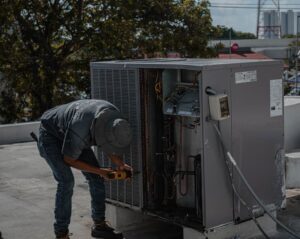
The outdoor condenser needs unrestricted airflow to release the heat it’s pulled from your home. Grass clippings, dirt, salt residue, and coastal humidity can coat the condenser coils and fins, making the unit work harder while cooling less effectively. A gentle rinse with a garden hose (with the power off) sometimes restores performance, but heavily corroded or damaged fins may need professional attention.
Leaky or Disconnected Ductwork
Many Brevard County homes route ductwork through hot, humid attics, where connections can loosen, insulation can degrade, and small leaks let cooled air escape before it ever reaches your living space. If some rooms feel warm while others cool normally, or you notice higher humidity indoors despite the AC running, attic duct leaks are a strong possibility.
Clogged Condensate Drain Line
Florida’s humidity means AC systems pull a lot of moisture out of the air, and that water has to drain somewhere. When the condensate line clogs with algae or debris, some systems shut down automatically as a safety measure, which can feel like the AC “just stopped” cooling.
DIY Fixes vs When to Call a Professional
Filter changes, thermostat battery swaps, and clearing debris away from the outdoor unit are reasonable for most homeowners to handle. Anything involving refrigerant, electrical components, the compressor, or a frozen coil should go to a licensed technician, both because specialized tools and EPA-regulated refrigerant handling are required, and because misdiagnosing these issues can turn a moderate repair into a full system replacement. If you’ve worked through the checklist above and the system still isn’t cooling, or the same problem keeps recurring, that’s a clear sign it’s time for a professional diagnosis rather than another round of guesswork. You can review the air conditioning services available if you want a sense of what a full inspection typically covers.
Why Fall Is the Right Time to Get This Diagnosed
Mid-October in Brevard County still brings warm, humid afternoons, which means a struggling AC is still very much noticeable now, not just a summer problem. Getting a diagnosis and repair done in the fall, ahead of next year’s cooling season, means avoiding the scheduling backlog and higher demand that hits every HVAC company once temperatures spike again in late spring. It also gives a technician time to order any specialty parts without you sweating through a wait during peak season. If your system needs more than a repair, exploring replacement and repair options now, rather than in July, gives you more room to make an unhurried decision.
Frequently Asked Questions
How long can I run my AC while it’s not cooling before it causes damage?
If the coil is frozen or the compressor is struggling, continuing to run the system can cause lasting damage within hours. Turn it off, let a frozen coil thaw, and address the underlying cause before running it again.
Why does my AC struggle more with cooling on humid days?
High humidity forces the system to work harder to remove moisture from the air in addition to lowering temperature, which puts extra strain on a system that’s already dealing with a dirty filter, low refrigerant, or a clogged condensate line.
Can I add refrigerant myself if my AC is low?
No. Refrigerant handling requires EPA certification, and adding refrigerant without finding and repairing the leak first only masks the problem temporarily while it continues to worsen.
Is a routine maintenance visit different from a repair call?
Yes. A maintenance visit checks refrigerant levels, coil condition, and airflow before problems start, while a repair call addresses a system that’s already underperforming. A maintenance plan is generally the more affordable path over time since it catches small issues like dirty coils before they turn into compressor failures.
Atlantic Air has been diagnosing cooling problems across the Space Coast long enough to know that an AC running without cooling rarely fixes itself, and waiting usually means a bigger repair later. If you’ve worked through the checklist above and the problem persists, Request Service Today!