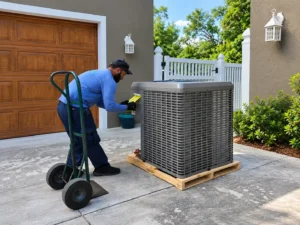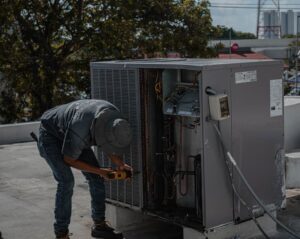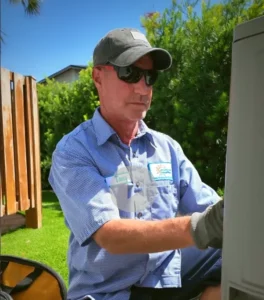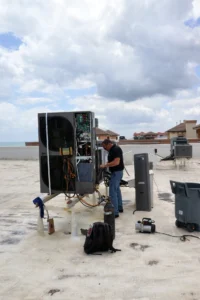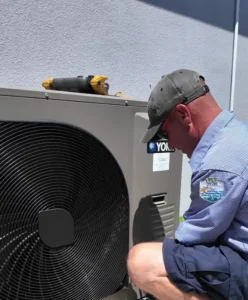
A professional AC maintenance visit near you in Brevard County typically includes cleaning the condenser and evaporator coils, checking refrigerant charge and pressure, inspecting electrical connections and capacitors, flushing the condensate drain line, calibrating the thermostat, and testing airflow across the system. Scheduling this in October or November, rather than waiting until May, means shorter appointment windows and enough lead time to fix anything minor before next summer’s heat and humidity put real strain on the system.
If you’re typing “ac maintenance near me” into Google right now, you’re probably weighing whether it’s worth booking a visit during the cooler months or waiting until closer to summer. Here’s exactly what a thorough fall tune-up covers, and why the timing works in your favor.
What Does a Fall AC Maintenance Visit Actually Include?
A complete maintenance visit is more than a quick filter swap. A technician working on a residential system in Brevard County should be checking each of the following:
- Coil cleaning: Both the evaporator coil (indoor) and condenser coil (outdoor) get cleaned of dust, pollen, and grime. In coastal areas, salt-laden air accelerates buildup on outdoor coils, which reduces heat transfer and forces the compressor to work harder.
- Refrigerant check: Technicians verify refrigerant pressure matches manufacturer specs. Low charge often points to a slow leak that’s easier to trace and repair in cooler weather than during a July heat wave.
- Electrical component inspection: Capacitors, contactors, and relays are tested under load. Florida’s heat and humidity shorten the lifespan of these parts, and a failing capacitor is one of the most common reasons a system stops cooling entirely.
- Condensate drain line flush: This line clogs easily with algae and mold in humid climates. A blocked drain can trigger water damage or an automatic shutoff, so clearing it now prevents an unpleasant surprise later.
- Thermostat calibration: Technicians confirm the thermostat is reading temperature accurately and cycling the system correctly, especially important if you’ve recently switched to a smart thermostat.
- Blower motor and ductwork inspection: Airflow is measured at the vents, and attic ductwork (common in Florida slab-on-grade homes) is checked for loose connections or insulation gaps that let conditioned air leak into a 130+ degree attic space.
- Filter replacement or cleaning: A clogged filter restricts airflow, forces the blower to work harder, and can cause the evaporator coil to freeze.
- Overall system test cycle: The unit is run through a full cooling cycle to confirm temperature split, cycle timing, and unusual noise or vibration.
Why Is Fall the Best Time to Schedule AC Maintenance?
Three practical reasons make October and November the smartest window for a maintenance visit in this part of Florida:
Appointment Availability Is Wide Open
Demand for HVAC service spikes hard between May and September, when systems that have been quietly failing all year finally give out in the heat. In the fall off-season, technicians have more flexible scheduling, which means you can often get a same-week appointment instead of waiting in a summer backlog.
Small Issues Are Cheaper to Catch Than to Ignore
A slightly low refrigerant charge, a capacitor testing at the low end of its range, or a partially clogged drain line won’t necessarily stop your AC from running today. But these are exactly the kinds of issues that turn into full breakdowns once the system is running eight or ten hours a day next summer. Catching them now, while the stakes are low, means less strain on the compressor and fewer surprises later.
Year-Round Humidity Still Demands Attention
Unlike northern climates where the AC shuts off completely for months, Brevard County systems keep working through fall and even winter to manage indoor humidity. That means coils, drain lines, and electrical components don’t get a true off-season rest, and fall maintenance is the closest thing to a reset before the demanding months ahead.
What Happens If You Skip Maintenance?
Systems that go without annual service tend to show a predictable pattern of decline: refrigerant charge drifts low, coils lose efficiency from dust and salt buildup, electrical components degrade faster under repeated voltage strain, and airflow drops as ducts and filters clog. Individually these are minor. Together, they force the compressor to run longer to hit the same set temperature, which raises energy bills and shortens the compressor’s usable life. Most manufacturers also require documented annual maintenance to keep parts warranties valid, so skipping service can cost you coverage you’ve already paid for.
How Often Should You Schedule Maintenance in This Climate?
For most homes in Brevard County, once a year is the minimum, but twice a year (spring and fall) is a better fit given how much work the system does across nearly every month. A spring visit ahead of peak cooling season catches anything that developed over winter, and a fall visit addresses wear from the heaviest usage period. If your home has an older system, runs constantly due to a larger square footage, or sits close to the coast where salt air accelerates corrosion, leaning toward the twice-a-year schedule is worth the extra attention. You can read more about how consistent upkeep affects energy efficiency and system lifespan if you’re weighing whether the extra visit is worthwhile.
Signs You Shouldn’t Wait for a Routine Visit
- Warm air blowing from vents even when the thermostat calls for cooling
- Ice forming on the indoor coil or refrigerant lines
- A noticeable rise in humidity indoors despite normal thermostat settings
- Short cycling, where the system turns on and off more frequently than usual
- Water pooling near the indoor air handler, a sign the condensate drain is already blocked
Any of these point to a problem that needs attention sooner than a scheduled fall tune-up, rather than something to note for next time.
Frequently Asked Questions
Does fall maintenance help if I already had a spring tune-up?
Yes. A spring visit checks the system before the cooling season starts, while a fall visit addresses the wear that accumulated during the months of heaviest use, which are two different windows of stress on the equipment.
Will maintenance lower my energy bills?
Clean coils, correct refrigerant charge, and properly sealed ductwork all reduce how hard the compressor and blower have to work, which translates directly into lower run times and lower energy use over a billing cycle.
Is a maintenance plan worth it compared to booking one-off visits?
A membership that bundles seasonal visits together tends to keep systems on a more consistent schedule than relying on memory alone. You can compare what’s included through the maintenance membership options available for Brevard County homes.
Can maintenance catch problems before a full system replacement is needed?
Often, yes. Many of the issues that eventually force a premature replacement, like a compressor that’s been running on low refrigerant for months, are identifiable during a routine check long before they become catastrophic. If your system is older and a technician flags multiple developing issues, it’s worth exploring air conditioning service and replacement options to understand your choices.
With scheduling wide open this time of year and small issues far easier to correct before next summer’s demand returns, now is a practical window to get ahead of it. Atlantic Air technicians serving Brevard County can walk through each of these checks on your system. Request Service Today!