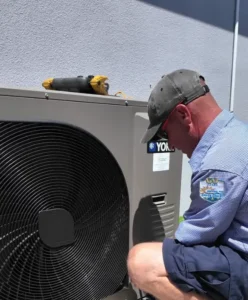
If your AC unit is not working, the most common causes are a tripped breaker or blown fuse, dead thermostat batteries or a thermostat wiring fault, a clogged condensate drain line that has triggered a safety switch, a failed capacitor, a frozen evaporator coil, or low refrigerant from a leak. A homeowner can safely check the breaker panel and thermostat settings in a few minutes. Anything involving electrical components, refrigerant, or the compressor needs a licensed technician.
In Brevard County, a dead AC in late August isn’t a minor inconvenience, it’s a real risk. Indoor temperatures in a closed-up Florida home can climb past 90°F within a couple of hours once the system stops running, and the humidity that comes with it accelerates mold growth on walls, furniture, and ductwork. Knowing which of these seven issues you’re dealing with helps you decide whether to grab a flashlight or pick up the phone.
1. Check the Breaker Panel First
A tripped breaker is the single most common reason an AC unit won’t even attempt to start. Outdoor condenser units and indoor air handlers typically run on separate 208/240-volt circuits, and either one can trip, especially during a hot, humid stretch when the compressor is working harder and pulling more amperage. Open your electrical panel, look for a breaker that’s sitting in the middle position instead of fully on or off, and switch it fully off, then back on. If it trips again immediately, don’t keep resetting it. A breaker that won’t hold usually points to a short or a failing component downstream, and that’s a job for a technician.
2. Rule Out a Thermostat Problem
Dead batteries, a blown low-voltage fuse, or a thermostat that’s lost its programming can all make a perfectly healthy AC unit look completely dead. Confirm the display is lit and set to “Cool” with a temperature setting below the current room temperature. If the screen is blank, swap the batteries. If it’s a smart thermostat, check that it hasn’t lost its Wi-Fi connection or reverted to a schedule you didn’t set. Loose thermostat wiring behind the wall plate is also common in older homes, but that wiring should be handled by a professional rather than pulled apart yourself.
3. Look for a Clogged Condensate Drain Line
Florida’s humidity means Space Coast AC systems pull an enormous amount of moisture out of the air, and that water has to go somewhere. It travels through a condensate drain line, and algae or debris buildup inside that line is one of the most frequent shutdown causes in this region. Most modern air handlers have a float switch that senses standing water and automatically shuts the whole system down to prevent an overflow into the attic or ceiling below. Check the drain pan under your indoor air handler (often located in the attic or a closet) for standing water, and look at the PVC drain line for a visible blockage. A wet-dry vacuum applied to the outdoor end of the drain line can sometimes clear a mild clog yourself. If water keeps backing up, the line likely needs to be flushed and treated by a technician.
4. Consider a Failed Capacitor or Contactor
If the outdoor condenser hums but the fan doesn’t spin, or the unit shuts off within seconds of starting, a failed run capacitor or a pitted contactor is a likely culprit. These small electrical components store and deliver the burst of energy the compressor and fan motor need to start, and they wear out from heat cycling, especially after years of Florida summers pushing the system to run nearly continuously. This is not a DIY repair. Capacitors hold a live electrical charge even when the unit is powered off, and replacing one requires matching the correct capacitance and voltage rating for your specific system.
5. Check for a Frozen Evaporator Coil
A layer of ice on the indoor evaporator coil or the refrigerant lines is a sign of restricted airflow or low refrigerant, not a sign the system is simply “working too hard.” A dirty air filter is the most frequent cause, restricting the airflow the coil needs to stay above freezing. Turn the system off, switch the thermostat fan to “On” to help it thaw, and check whether your filter is visibly clogged. If the coil refreezes once the system runs again, the underlying cause is likely a refrigerant leak or a failing blower motor, both of which need professional diagnosis.
6. Suspect a Refrigerant Leak
Low refrigerant from a slow leak in the coil or line set will eventually stop a system from cooling effectively and, left unaddressed, can lead to a hard shutdown to protect the compressor. Warning signs include hissing sounds near the indoor unit, ice buildup on the coil, and noticeably weak airflow from the vents even though the system is running. Refrigerant handling is regulated and requires specialized equipment to locate the leak, repair it, and recharge the system to the correct pressure, so this is strictly a call for a licensed technician.
7. Watch for a Failed Compressor or Outdoor Fan Motor
The compressor is the heart of your outdoor condenser, and when it fails, the whole system stops producing cool air even if the indoor blower keeps running. A failed outdoor fan motor produces a similar effect: the compressor overheats and shuts itself off because there’s no airflow moving heat away from the coil. Salt air exposure along the coastal parts of Brevard County can accelerate corrosion on outdoor unit components over time, shortening the life of motors and electrical connections compared to inland installations. Signs of either failure include a condenser that’s warm to the touch and silent, or one that clicks repeatedly without starting.
What Can You Safely Check Yourself?
- Breaker panel and any AC-specific disconnect switch near the outdoor unit
- Thermostat batteries, settings, and screen
- Air filter for visible dirt or blockage
- Condensate drain pan for standing water
- Outdoor unit for visible debris, vegetation, or ice on the lines
When Should You Call a Professional Instead?
Call a technician any time you smell burning, hear grinding, clicking, or hissing from either unit, see ice on the coil or lines, notice a breaker that trips repeatedly, or find water pooling despite a clear drain line. These point to electrical, refrigerant, or mechanical failures that require diagnostic tools and parts a homeowner won’t have on hand, and attempting to force a restart on a system with an internal fault risks turning a repairable issue into a full compressor or coil replacement.
A system that’s cutting out repeatedly, even if it restarts on its own, is usually further along in failing than it looks; if you’re weighing repair against replacement for an older unit, that decision often comes down to the age of the system and how frequently it’s been breaking down. Regular seasonal upkeep, like the steps covered in our guide to preparing your AC for Florida’s summer heat, catches many of these issues, especially drain line clogs and low refrigerant, before they cause a full shutdown.
Once you’ve ruled out the breaker and thermostat and you’re still without cool air, guessing further risks the kind of prolonged indoor heat and humidity that can damage a home as much as it does your comfort. Atlantic Air’s technicians can diagnose air conditioning failures across Brevard County and get a straight answer on what’s wrong instead of another round of trial and error. Request Service Today!